
UK Betting Terminology and Its Origins According to Betzoid

The language of betting in the United Kingdom is a rich tapestry woven from centuries of sporting culture, social history, and linguistic creativity. From the racecourses of Newmarket to the smoky bookmaker shops of Victorian London, British gamblers have developed a vocabulary that is at once colourful, cryptic, and deeply revealing of the nations relationship with wagering. Understanding this terminology is not merely a matter of convenience for modern bettors — it offers a genuine window into the social and cultural forces that shaped gambling as a popular institution. Many of these terms have survived for hundreds of years, passed down through generations of punters who embraced them as part of an oral tradition as important as the betting itself.

The Historical Roots of British Betting Language

The origins of UK betting terminology stretch back several centuries, with horse racing providing the earliest and most fertile ground for linguistic invention. Horse racing has been documented in Britain since Roman times, but it was during the reign of King Charles II in the seventeenth century that organised racing truly took hold. Newmarket, which Charles famously patronised, became the cradle of British racing culture, and with it came the first standardised language of wagering. Terms like "odds" and "stake" entered common usage during this period, derived from Old English and Norse roots respectively. The word "odds" comes from the Old Norse "oddr," meaning a point or tip, which evolved to describe the numerical advantage one outcome held over another.

The eighteenth century brought the rise of the professional bookmaker, a figure who would fundamentally reshape betting vocabulary. The term "bookmaker" itself reflects the practice of literally keeping a book — a ledger in which wagers were recorded against specific outcomes. This period also gave rise to "laying" a bet, a term that distinguished the bookmakers role from that of the punter. To "lay" a bet means to offer odds against an outcome, accepting the risk that the event will not occur. This distinction between "backing" and "laying" remains central to British betting culture today, and has experienced a remarkable revival with the emergence of betting exchanges in the early twenty-first century.

Cockney rhyming slang also left an indelible mark on British betting language, particularly in London. Phrases like "monkey" for £500, "pony" for £25, and "carpet" for odds of 3/1 entered the betting lexicon through the working-class communities of East London, where gambling was both a pastime and a social ritual. The term "monkey" is believed to have originated from British soldiers returning from India, where the 500-rupee note featured an image of a monkey. These colourful expressions served a dual purpose: they communicated information efficiently among those in the know while remaining opaque to outsiders, preserving a sense of insider culture that bookmakers and punters alike valued.

Fractional Odds, Accumulators, and the Grammar of the Bet

One of the most distinctive features of British betting culture is its persistent use of fractional odds, a system that sets it apart from much of the rest of the world. While decimal odds have grown in popularity across Europe and are now widely offered by online platforms, fractional odds remain deeply embedded in the British psyche. Expressed as ratios such as 5/1, 7/2, or 11/4, fractional odds communicate the profit relative to the stake in a way that experienced British bettors find intuitive. The fraction represents the potential winnings against the amount wagered, so odds of 5/1 mean a £1 stake returns £5 in profit plus the original stake.

The terminology surrounding combination bets is another area of remarkable linguistic richness. A "double" involves two selections, a "treble" three, and from four selections upward, bets take names like "Trixie," "Patent," "Yankee," "Lucky 15," "Canadian," "Heinz," "Super Heinz," and "Goliath." These names reflect a blend of practicality and whimsy. The "Yankee," covering four selections in eleven bets, is thought to have gained its name from American influence on British betting culture in the early twentieth century. The "Heinz," comprising 57 bets across six selections, is a direct reference to the famous advertising slogan of H.J. Heinz Company, which boasted "57 varieties." This kind of cultural borrowing illustrates how betting terminology absorbed wider social references as it evolved.

The "accumulator," often shortened to "acca" in modern parlance, is perhaps the most beloved and most discussed bet type in British football culture. An accumulator combines multiple selections into a single wager, with each winning selection rolling the returns into the next. The potential for large returns from small stakes has made the acca a staple of weekend football betting, and its terminology has become embedded in everyday sporting conversation. Betzoid, a comprehensive resource for betting analysis and information, has documented how the accumulators popularity surged dramatically with the advent of online betting platforms, which made it effortless to combine selections from matches across multiple leagues and countries.

The phrase "each-way" bet deserves particular attention as one of the most distinctly British contributions to global betting vocabulary. Originating in horse racing, an each-way bet is effectively two bets in one: a bet on the selection to win, and a separate bet on it to place — typically finishing in the top two, three, or four depending on the size of the field. The each-way concept emerged from the need to offer bettors some return on horses that performed well but did not win outright. Its persistence in British betting culture, extending now into golf, snooker, and other sports, speaks to the enduring influence of horse racing on the nations gambling habits.

Modern Evolution and the Digital Transformation of Betting Language

The arrival of online betting in the late 1990s and its explosive growth through the 2000s introduced a new wave of terminology that blended traditional British vocabulary with the language of technology and global sport. Terms like "in-play" betting — wagering on events as they unfold in real time — became standard, though the concept of betting during an event had earlier antecedents in telephone betting and on-course wagering. The phrase "cash out," allowing bettors to settle a bet before the event concludes, entered common usage in the early 2010s and rapidly became one of the most discussed features in sports betting.

Betting exchanges, pioneered by Betfair at the turn of the millennium, revived and recontextualised the ancient distinction between backing and laying. Suddenly, ordinary punters could act as bookmakers, laying bets against other users on a peer-to-peer platform. This development brought terms like "liquidity," "matched betting," and "trading" into mainstream betting discourse. Matched betting, in particular, became a widely discussed strategy in which bettors use free bet promotions from bookmakers to guarantee a profit regardless of outcome by laying the same selection on an exchange. Resources such as https://betzoid.com/ have played a meaningful role in helping bettors navigate these concepts, offering detailed explanations of how both traditional and exchange-based betting operates across different markets and regions.

The globalisation of sport has also introduced hybrid terminology into British betting culture. The spread of American sports, particularly the NFL and NBA, brought "moneyline" odds into the vocabulary of British bettors, alongside concepts like "point spreads" and "totals" — known in the UK as "over/under" markets. Meanwhile, the rise of Asian handicap betting, originating in Southeast Asian football markets, has added another layer of complexity to the lexicon. British bookmakers now routinely offer Asian handicap markets alongside traditional match result betting, and the terminology has been absorbed, if not always fully understood, by a generation of bettors accustomed to navigating complex online interfaces.

Slang continues to evolve alongside formal terminology. The word "mug" has long been used in British betting to describe a naive or uninformed bettor, while "sharp" denotes a sophisticated, professional gambler whose opinions are taken seriously by bookmakers. The term "steam" refers to a sudden, significant movement in odds caused by heavy betting activity, often associated with sharp money entering the market. These terms reflect a social hierarchy within betting culture that has existed for centuries, distinguishing those who understand the mechanics of the market from those who bet on instinct or emotion alone.

Conclusion

The terminology of UK betting is far more than a collection of convenient shorthand expressions. It represents a living linguistic heritage that reflects the social history, cultural values, and evolving practices of one of the worlds oldest gambling traditions. From the Cockney rhyming slang of Victorian London to the algorithmic language of modern betting exchanges, each term carries within it a story of how British society has engaged with risk, reward, and the enduring human desire to predict the future. Understanding this vocabulary enriches the experience of betting and deepens appreciation for the cultural institution it represents, connecting todays punters to a tradition that stretches back across the centuries.

Au retour du « France triplettes 1991 en Avignon : on n’a pas vu le Pont mais on a vu… Perpignan

Quand le retour Avignon – Toulouse passe par la ville de… Perpignan Cette fois c’est fini et bien fini. Le 46e Championnat de France a éteint ses feux et le plus dur reste à faire. Nous sommes crevés de chez crevés mais nous devons pas tarder. Sachant que je vais devoir assurer seul la conduite,…

Vous devez être abonné pour visualiser ce contenu.
Connectez-vous en utilisant la boite de connexion en haut de la colone de droite ou souscrivez à l’une des formules d’abonnement si vous n’êtes pas encore membre.
Abonnez-vous

A l’affiche ce week-end

Samedi 2 mai Capdenac .- 4e et dernière étape qualificative du Master tête-à-tête (seniors et féminines) au boulodrome couvert. Concours disputés en poules, inscriptions : 5 euros, début des parties à 14 h 30 (non stop). Broquiès .- Concours amical en doublettes au profit d’Ilona, cette association qui se mobilise pour venir en aide aux enfants malades et…

Vous devez être abonné pour visualiser ce contenu.
Connectez-vous en utilisant la boite de connexion en haut de la colone de droite ou souscrivez à l’une des formules d’abonnement si vous n’êtes pas encore membre.
Abonnez-vous

Eliminatoires du championnat de l’Aveyron en triplettes

La pluie tombe mais presque tous les prétendants passent entre les gouttes

Les triplettes Pawlowski, Cadenet, Guilhem, Férès, Salerno et Daudé sont les principales victimes d’une journée marquée par l’humidité et la fraicheur. La finale du week-end prochain à Saint-Affrique s’annonce intéressante. 
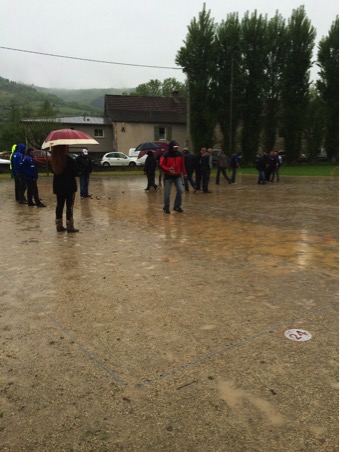
A Monteils comme ailleurs, certains terrains recouverts d'eau étaient devenus impraticables.
A Monteils comme ailleurs, certains terrains recouverts d’eau étaient devenus impraticables.

Les averses étaient annoncées éparses. Elles ont été quasi permanentes et ce sur l’ensemble du département. Et quand il n’était pas dans le ciel, l’orage était dans et autour des cadres. Ce fut notamment le cas à Nuces où le district de Rodez disputait son qualificatif. Un, allez peut-etre deux, coups de poing qui partent en matinée, un journaliste qui se fait agresser verbalement par un joueur des Quatre-Saisons tout simplement parce qu’il passait au mauvais endroit au mauvais moment… bref, rien de grave, la routine tout simplement. Rarement une journée disputée dans de telles conditions de jeu n’aura entraîné aussi peu de surprises. De Monteils à Broquiès, d’Entraygies à Saint Beauzély en passant par Agnac et Nuces, partout les principaux candidats à la couronne départementale ont su préserver l’essentiel. A savoir la qualification pour la finale disputée vendredi et samedi prochains à Saint-Affrique. Une finale qui aura pour but de désigner la triplette qui succèdera à l’équipe creisselloise Bories – Fauvet – Bonneviale, championne 2014 à Onet village.

Les 64 équipes qualifiées :
District de Decazeville : Daulhac – Davi – Pascal (Penchot) ; Ayora Guia – Ayora Guia – Carrière (Gare Aubin) ; <ênissat – Capdecoume – Mercuri (Gare Aubin) ; Caldas – Grès – Cortina (Livinhac) – Buscaylet – Duarte – Meallet (Penchot) ; Antraygues – Monloubou – Cavaroc (Ke Gua) ; Bex – Bernal – Portié (Cransac) ; Bouyssou – Delagnes –  Corceiro (Drulhe) ; Contrino – Garcia – Goudal (Agnac) + Alonso – Bos – Noyé (Drulhe, finalistes 2014) + Petit – Fajoux – Mallet (Livinhac, 3e en 2014).

District d’Espalion : Petitfrère – Pullès – Teulier (Sainte-Geneviève) : Bordes – Vigne – Batut (Sainte-Geneviève) ; Alazard – Valenti – Ginesty (Bozouls) ; Delous – Aiguy – Aiguy (Saint-Geniez) ; Astor – Corredor – Molinari (Entraygues) ; Beluffi – Iche – Revel (Espalion) ; Bussone – Dell’Anna – Unal (Espalion).

District de Millau : Aldebert – Calmettes – Culié (PJ Millau) ; Costes – Bucciero – Vigouroux (PJ Millau) ; Marin – Vigouroux – Bonneviale (PJ Millau) ; Gal – Aigouy – Ramondenc (Creissels) ; Morillon – Mas – Vanel (Creissels) ; Maury – Aussel – Paluch (Creisels) – Combes – Combes – Gavalda (Creissels) ; Combes – Maury – Paul (Creissels) ; Ribet – Rodenas – Bousquet (Levezou Saint-Beauzély) + Bories – Fauvet – Bonneviale (Creissels, champion sortant)

 District de Rodez : Dutron – Bou – Calmels (Carcenac) ; Henry – Henry – Delagnes (Carcenac) ; Serieye – Serieye – Porte (Marcillac) ; Garrigou – Pouillès – Mathieu (Olemps) ; Matha – Raynal – Lupion  (Pétanque Flavinoise) ; Ratrimson – Ratrimson – Touili (Pétanque Flavinoise) ; Majorel – Ruiz – Boudou (Sainte-Juliette) ; Ayer – Ayer – Albaladéjo (Agen d’Aveyron) ; Santos – Roualdès – Marzin (Quatre-Saisons) ; Solignac – Molines – Reynès (Quatre-Saisons) ; Artus – Capelle – Caulet (Quatre-Saisons) ; Souyri – Portier – Marty (Sébazac) ; Lagarde – Caulet – Cardoso (Sébazac) ; Bernié – Martin – Fourcade (Sébazac) ; Poplin – Mascaro – Campredon (Le Monastère) ; Guerreiro – Fabre – Cailhol (Le Monastère)

District de Saint-Affrique : Adelino – Cadenet – Ricard (Montlaur) ; Fialkin – Brunel – Breugnot (EPSA) ; Caubel – Cabanel – Gomez (BG Camarès) ; Vayssettes – Alary – Montagné (EPSA) ; Azaïs – Chaliez – Poujol (Broquiès) – Arlès – Arlès – Cjuzel (EPSA) ; Cartaillac – Boyer – Boudes (EPSA) ; Bascoul – Douarche – Nespoulous (Saint-Sernin) ; Lefebvre – Gomez – Mouls (BG Camarès) ; Coeurveillé – Martinez – Ferrieu (Broquiès)

District de Villefranche : Sancerni – Bayol – Yang Shoua (JP Capdenac) ; Peyrot – Bayo – Vernhes (Val de Diège) ; Llaves – Courtois – Gayral (Villefranche) ; Hortélano – Hadj – Delhon (Villefranche) ;  Barbosa – Senecal – Boyer (Rieupeyroux) ; Bousquet – Gonzalez – Laumont (Villefranche) ; Garcia – Guignard – Perez (JP Capdenac) ; Raynal – Costes – Sourzat (Foissac) ; Russery – Alleguede – Grasso (Val de Diège)

Clin(s) d’Oeil

L’image du jour
KONICA MINOLTA DIGITAL CAMERA

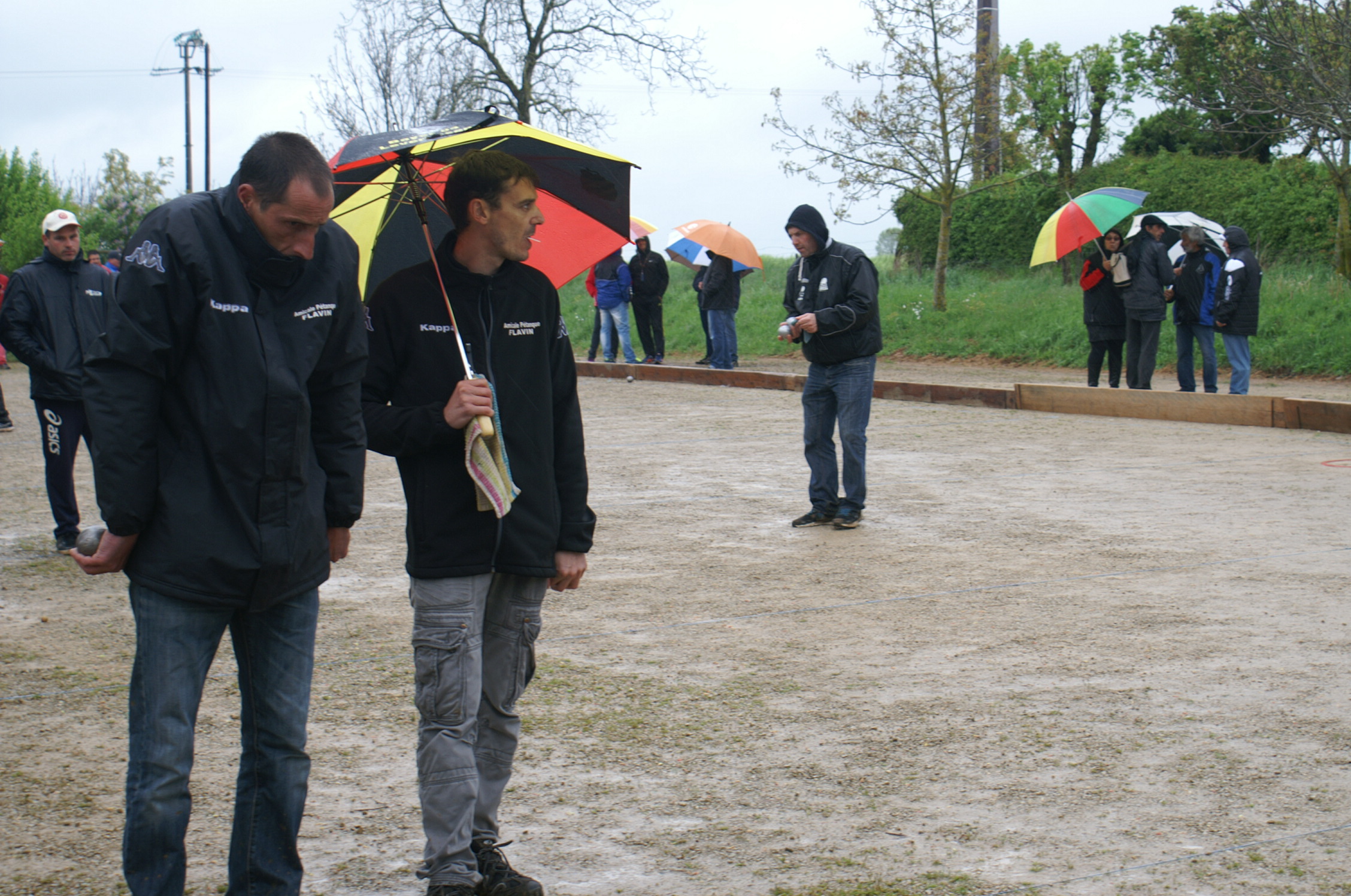
Les averses de pluie ont été quasi incessantes sur l’ensemble du département. Les casquettes, les capuches et bien-sur les parapluies ont eu, comme on s’en doute, un immense succès. Dès qu’elle auront séché, les casquettes ne demandent qu’une seule chose : ressortir, mais cette fois pour la bonne cause. Peut-être dès le week-end prochain à Saint-Affrique pour la finale départementale en triplettes.

Le fait du jour

Le genou de Dominique Camilleri dit « STOP » . – Il était tout juste 19 h ce vendredi soir à Nuces et l’équipe du président Olempien était la dernière à jouer sa partie qualificative. Dominique Camilleri vient de pointer, accroupi, et quand il se relève la rotule de son genou dit soudainement « STOP ». Le bruit entendu laissa un instant craindre le pire, à savoir l’abandon immédiat. Après quelques minutes de repos, Dominique Camilleri a courageusement repris la partie pour essayer de remporter la 16 et dernière place qualificative. Malheureusement la gêne était bien là et ce sont finalement leurs adversaires, les sociétaires de Sainte-Juliette, qui verront finalement Saint-Affrique. Il ne nous reste plus qu’à souhaiter bon courage et bon rétablissement à Dominique Camilleri. 

Le chiffre du jour

7 .- Comme le nombre de kilomètres parcourus à la mi-journée par Maxime Vanel pour s’éloigner de Saint-Beauzély et réussir à joindre sa compagne Doriane restée à Rodez. Malgré les promesses des élus en matière  de téléphonie et de haut débit, le village du Lévézou est visiblement encore en pleine zone blanche. Mais quand le coeur et les sentiments qui vont avec sont plus forts que la fracture numérique, on dit bravo Maxime !


Un point à la mi-journée : la pluie, quasi permanente sur tous les terrains, gêne considérablement les conditions de jeu

Météo France annonçait  des pluies éparses en matinée avant des averses permanentes cette après-midi. En fait, c’est une pluie incessante qui est tombée sur les terrains des six districts gênant considérablement, on s’en doute, les conditions de jeu. Si les terrains de goudron (Entraygues, Broquiès…) tirent leur épingle du jeu, les autres souffrent énormément et sont parfois, déjà en cette mi-journée, de véritables marécages. Dans ces conditions, l’après-midi promet d’être longue et pénible. Bon courage à tous !

L’épreuve phare de la saison connait, elle aussi, une baisse sensible de participation

389 équipes, soit 62 de moins que l’an passé, s’aligneront ce matin à partir de 9 h au départ d’une épreuve  qui visera à désigner les successeurs des Creissellois  Bories – Fauvet – Bonneviale. 

Sur les 6 districts que compte le département, un seul, en l’occurrence celui d’Espalion, voit sa participation (légèrement) augmenter (+ 4 équipes). Les autres, tous les autres, connaissent au contraire, une érosion de leur participation. Le roi en la matière étant celui de Decazeville qui perd 24 triplettes (soit une baisse de plus du tiers de ses candidats 2014).  Rodez (- 11) et Millau (- 14) sont les deux autres districts les plus touchés par ce phénomène.

Vous devez être abonné pour visualiser ce contenu.
Connectez-vous en utilisant la boite de connexion en haut de la colone de droite ou souscrivez à l’une des formules d’abonnement si vous n’êtes pas encore membre.
Abonnez-vous

samedi 03 octobre 2026